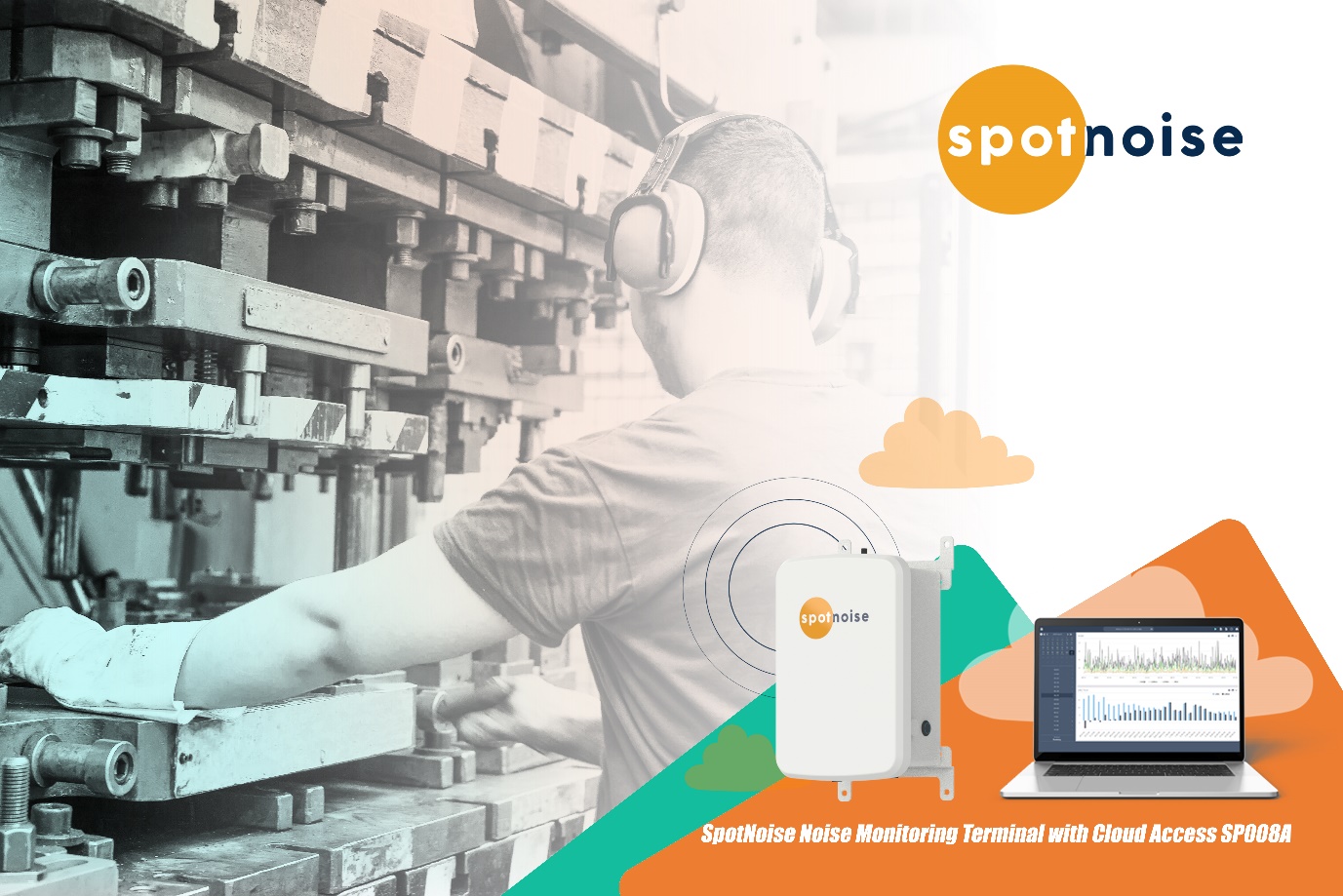
In today's industrial and commercial environments, workplace safety is a top priority. One crucial aspect that often goes overlooked is noise exposure. Excessive noise levels can have detrimental effects on employees' health and productivity — yet many workplaces still lack continuous, calibrated noise monitoring.
The hidden cost of occupational noise
Noise-induced hearing loss (NIHL) is one of the most common occupational diseases worldwide. According to the WHO, over 1 billion young people are at risk of hearing loss due to unsafe sound levels. In industrial settings, prolonged exposure above 85 dB(A) — the regulatory threshold in most jurisdictions — causes permanent, irreversible cochlear damage.
Beyond hearing loss, high noise environments increase stress, reduce concentration, impair communication, and contribute to workplace accidents. Workers in noisy environments make more errors and have slower reaction times — a serious concern in precision manufacturing, logistics, and heavy industry.
Regulatory requirements
Most countries mandate that employers assess and control occupational noise exposure. In the EU, the Physical Agents (Noise) Directive sets action levels at:
- 80 dB(A) LAeq,8h — lower exposure action value (hearing protection must be made available)
- 85 dB(A) LAeq,8h — upper exposure action value (hearing protection must be worn)
- 87 dB(A) LAeq,8h — exposure limit value (must not be exceeded)
- 140 dB(C) Lpeak — peak limit value for impulsive noise
Compliance requires regular noise assessments using Class 1 or Class 2 sound level meters (IEC 61672-1). Continuous monitoring with fixed stations provides a far more complete picture than periodic spot measurements.
How continuous monitoring transforms safety management
Integrating continuous noise monitoring data into a workplace safety management system provides several key advantages:
- Real-time alerts when noise thresholds are exceeded, enabling immediate intervention
- Historic data for trend analysis — identifying which machines, shifts, or processes generate the most noise
- Automatic documentation for regulatory compliance and audit purposes
- Evidence base for engineering controls — damping, enclosures, or process modifications
- Demonstration of due diligence in the event of a hearing loss compensation claim
SpotNoise in industrial environments
The SpotNoise SP008A is IP67 weatherproof and rated for operation up to 60°C, making it suitable for harsh factory and industrial environments. Its IEC 61672-1 Class 1 certification ensures that measured LAeq, Lmax, Lmin, and Lpeak values are legally recognised and admissible for regulatory reporting.
With cloud connectivity, factory managers can monitor noise levels across multiple zones simultaneously, receive instant SMS or email alerts, and export CSV data for health and safety reports — all without being on site.
Monitor your workplace noise levels
Get certified, continuous noise data for your facility. Contact us to discuss the right monitoring solution for your environment.
Get in touch